
For many products, temperature and humidity control are essential during manufacturing, transport, and storage. This is especially important in industries such as pharmaceuticals, healthcare, biotechnology, food and beverage, medical devices, laboratories, and cold chain logistics. If products are exposed to the wrong environmental conditions, they may lose quality, become unsafe, or fail to meet regulatory standards.
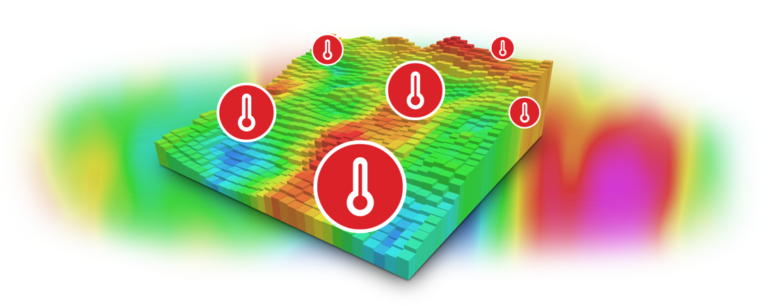
This is where thermal mapping becomes important. Also known as temperature mapping, thermal mapping is the process of measuring and analyzing temperature and humidity conditions across a controlled space. Instead of relying on a single thermometer or basic monitoring device, thermal mapping uses multiple data loggers placed throughout an area to identify hot spots, cold spots, humidity changes, airflow problems, and environmental risks.
Thermal mapping helps companies understand how temperature and humidity behave in warehouses, refrigerators, freezers, storage rooms, cleanrooms, ovens, vehicles, and other controlled environments. It gives businesses the data they need to protect products, meet compliance requirements, improve HVAC performance, and create better long-term monitoring plans.
Below are the key reasons thermal mapping is important for businesses that handle temperature-sensitive products.
What Is Thermal Mapping?
Thermal mapping is a documented study that measures temperature and humidity distribution within a defined space over a specific period of time. The goal is to understand how environmental conditions change across different areas and under different operating conditions.
A thermal mapping study usually involves placing multiple calibrated data loggers in strategic locations. These devices collect temperature and humidity readings at regular intervals. After the study is complete, the data is reviewed to identify patterns, risks, and areas where environmental conditions may fall outside acceptable limits.
Thermal mapping can be used in:
- Pharmaceutical warehouses
- Cold storage facilities
- Food and beverage storage areas
- Medical device storage spaces
- Laboratories
- Refrigerators and freezers
- Controlled manufacturing rooms
- Distribution vehicles
- Cleanrooms
- Ovens, incubators, and sterilization areas
The result is a detailed picture of how the space performs. This helps businesses understand whether products are being stored or processed under the correct conditions.
Thermal Mapping vs. Temperature Monitoring
Thermal mapping and temperature monitoring are related, but they are not the same. Temperature monitoring is the ongoing process of checking environmental conditions after a system is already in place. Thermal mapping is usually performed first to understand where monitoring sensors should be placed and which areas require closer attention.
For example, a warehouse may have one wall-mounted temperature sensor, but that sensor may not detect a cold corner, a warm shelf near a door, or a humidity issue near an air vent. Thermal mapping helps reveal these hidden patterns.
In simple terms:
- Thermal mapping studies the full environment to identify risk areas.
- Temperature monitoring tracks selected points continuously after risks are understood.
A good monitoring plan usually begins with a proper thermal mapping study.
1. Protecting Products and Consumers
The most important reason for thermal mapping is product protection. Many products are sensitive to temperature and humidity changes. If they are exposed to conditions outside the required range, their quality, safety, or effectiveness may be affected.
This can be a serious issue in industries such as pharmaceuticals, healthcare, food production, biotechnology, and medical storage. A vaccine, medicine, laboratory sample, food product, or medical device may become unsafe or unusable if it is stored under the wrong conditions.
Thermal mapping helps businesses answer important questions such as:
- Are all areas of the storage room within the required temperature range?
- Where are the warmest and coldest locations?
- Does humidity rise in certain parts of the facility?
- What happens when doors are opened frequently?
- How long does the room stay within range during a power outage?
- How do outside weather conditions affect the inside environment?
- Does product placement affect temperature exposure?
Without thermal mapping, a company may believe its space is controlled when some areas are actually outside acceptable limits. This can lead to product spoilage, recalls, destroyed inventory, customer complaints, and safety risks.
If unsafe products reach consumers, the consequences can be serious. A company may face regulatory penalties, lawsuits, reputational damage, and financial loss. Thermal mapping helps reduce these risks by giving businesses real data about how their controlled spaces perform.
2. Maintaining Product Quality and Shelf Life
Temperature and humidity do not only affect safety. They can also affect product quality and shelf life. Products that are stored too warm, too cold, too dry, or too humid may degrade faster than expected.
For example, food products may spoil, pharmaceuticals may lose potency, packaging may weaken, and sensitive materials may change texture, stability, or performance. Even short temperature excursions can matter when products have strict storage requirements.
Thermal mapping can help businesses protect product quality by identifying:
- Temperature fluctuations during daily operations
- Humidity changes that may damage products
- Problem areas near doors, vents, windows, or machinery
- Storage zones that are unsuitable for sensitive inventory
- Areas where airflow is blocked by shelving or product placement
By using this data, companies can adjust storage layouts, improve airflow, relocate sensors, change operating procedures, or upgrade equipment before product quality is affected.
3. Achieving and Maintaining Regulatory Compliance
Businesses that handle regulated products must often prove that they maintain proper temperature and humidity conditions. This is especially true in healthcare, pharmaceutical, food, and life sciences industries. Regulators may require documented evidence that controlled environments are suitable for product storage or production.
Thermal mapping supports compliance because it provides a documented record of environmental performance. It helps show that a facility understands its temperature-controlled areas and has taken steps to manage risk.
A thermal mapping study can support compliance by documenting:
- Where data loggers were placed
- How long the study lasted
- What temperature and humidity ranges were recorded
- Where hot spots and cold spots were found
- Whether conditions stayed within acceptable limits
- What corrective actions were recommended
- Where permanent monitoring sensors should be located
When inspectors visit a facility, they may review records, procedures, storage conditions, and environmental controls. A complete thermal mapping report can help demonstrate that the company has evaluated its controlled spaces and is monitoring them appropriately.
Thermal mapping can also help companies prepare for audits by identifying problems before inspectors find them. This gives the business time to correct issues, update procedures, and improve compliance documentation.
4. Understanding the Impact of HVAC Systems
Thermal mapping can also show how well your heating, ventilation, and air conditioning system performs. In controlled environments, HVAC systems play a major role in maintaining stable temperature and humidity. If an HVAC system is poorly designed, overloaded, blocked, or failing, thermal mapping can reveal the problem.
You can think of thermal mapping as a stress test for your HVAC system. A proper study gathers data under different conditions, such as empty vs. full storage areas, doors open vs. closed, hot days vs. cold days, and normal operation vs. emergency conditions.
Thermal mapping can help identify HVAC-related issues such as:
- Uneven air distribution
- Hot spots near doors or windows
- Cold spots near vents
- Humidity buildup
- Blocked airflow caused by shelving or inventory
- Areas that recover slowly after doors are opened
- Systems that cannot maintain conditions during peak demand
This information can be useful when booking an HVAC service in Memphis or in another relevant location. Sharing thermal mapping data with an HVAC technician can help them better understand the system’s performance and recommend more targeted improvements.
In some cases, thermal mapping may show that a company needs system upgrades. In other cases, it may show that simple changes, such as adjusting airflow, changing shelving layouts, sealing gaps, or moving sensors, can improve environmental control. It may even reveal opportunities to reduce energy use and save money over time.
5. Determining the Best Monitoring Locations
One of the most practical benefits of thermal mapping is that it helps determine where permanent monitoring sensors should be placed. If sensors are placed in the wrong locations, they may fail to detect the areas most at risk.
A thermal map identifies where temperature and humidity are most likely to fluctuate. These locations may include warm zones, cold zones, doorways, corners, high shelves, low shelves, areas near vents, or spaces affected by outside walls.
After thermal mapping, companies can create a better monitoring plan by deciding:
- Where permanent sensors should be installed
- Which areas need stricter monitoring
- How often readings should be reviewed
- What alert limits should be set
- What actions should be taken during temperature excursions
- Which areas should not be used for sensitive products
As Dickson notes, temperature mapping for quality and compliance is a detailed process that helps create a complete picture of environmental conditions. Once mapping is complete, long-term monitoring becomes more accurate and useful.
6. Reducing Product Loss and Financial Risk
Product loss can be extremely expensive, especially in industries where inventory is high-value or difficult to replace. Pharmaceuticals, vaccines, specialty foods, biological samples, and medical materials may cost thousands or even millions of dollars if they must be discarded because of improper storage conditions.
Thermal mapping helps reduce financial risk by identifying environmental weaknesses before they cause product loss. A company can use mapping data to make improvements, update procedures, and prevent avoidable damage.
Thermal mapping may help reduce losses caused by:
- Incorrect storage temperatures
- Humidity damage
- Freezer or refrigerator failure
- Power outages
- Improper sensor placement
- Blocked airflow
- Door-opening frequency
- Poor loading practices
By protecting inventory, thermal mapping can save money and reduce the risk of costly recalls or product destruction.
7. Improving Standard Operating Procedures
Thermal mapping can also help companies improve their standard operating procedures. SOPs are important because employees need clear instructions for handling temperature-sensitive products, responding to alarms, opening doors, loading storage areas, and managing equipment issues.
A thermal mapping study may reveal that existing procedures are not strong enough. For example, it may show that a refrigerator temperature rises too quickly when the door is open for more than a few minutes. It may show that products should not be stored near a specific wall or vent. It may show that certain areas require additional checks during summer months.
Based on mapping results, companies can update SOPs for:
- Product placement
- Door-opening limits
- Emergency power loss response
- Sensor alarm response
- Inventory loading and unloading
- Equipment maintenance
- Temperature excursion investigation
- Employee training
Better SOPs help employees make consistent decisions and reduce the risk of human error.
8. Supporting Cold Chain Logistics
Thermal mapping is not limited to warehouses and production spaces. It is also important in cold chain logistics. Temperature-sensitive products may need to remain within a strict range while being transported from one location to another.
Cold chain failures can happen in trucks, shipping containers, loading docks, temporary storage areas, and last-mile delivery routes. Thermal mapping can help companies understand how temperature behaves during transport and where risks may appear.
Thermal mapping in cold chain logistics can help answer:
- Does the vehicle maintain the required temperature range?
- Are there hot or cold spots inside the transport unit?
- How does door opening affect internal conditions?
- How long can the vehicle hold temperature during delays?
- Where should products be placed inside the vehicle?
- Where should sensors be installed during transport?
For businesses that transport pharmaceuticals, food, biological materials, or other sensitive goods, cold chain thermal mapping can be essential for quality and compliance.
When Should Thermal Mapping Be Performed?
Thermal mapping should be performed before a controlled space is used for sensitive products. It should also be repeated when conditions change or when regulatory expectations require updated validation.
Common times to perform thermal mapping include:
- Before using a new storage area
- After installing new HVAC equipment
- After changing shelving or room layout
- After moving sensors
- After major repairs or renovations
- When adding new product categories
- During seasonal temperature extremes
- Before regulatory inspections or audits
- After repeated temperature excursions
Because outside weather can affect internal conditions, many companies perform mapping during both warm and cold seasons. This helps confirm that the environment remains suitable throughout the year.
Common Thermal Mapping Mistakes to Avoid
Thermal mapping must be done carefully to produce useful results. A weak or incomplete study may miss important risks and create a false sense of security.
Common mistakes include:
- Using too few data loggers
- Placing loggers only near existing sensors
- Not mapping during different operating conditions
- Ignoring humidity when it matters for the product
- Running the study for too short a period
- Failing to include door-opening or loading activity
- Not documenting logger placement clearly
- Not using calibrated equipment
- Failing to update SOPs after the study
- Not repeating mapping after major changes
A thermal mapping study should be planned, documented, reviewed, and used to improve the facility’s monitoring and control strategy.
Final Thoughts on Thermal Mapping
Thermal mapping is essential for companies that manufacture, store, or transport temperature-sensitive products. It provides a detailed view of temperature and humidity conditions across controlled spaces, helping businesses protect products, keep consumers safe, meet regulatory expectations, and improve long-term monitoring.
Unlike basic temperature monitoring, thermal mapping shows how conditions vary throughout an entire space and under different real-world scenarios. It can reveal hot spots, cold spots, humidity risks, HVAC weaknesses, poor airflow, sensor placement problems, and areas that require stricter procedures.
For businesses in pharmaceuticals, healthcare, food and beverage, laboratories, biotechnology, and cold chain logistics, thermal mapping is not just a technical exercise. It is a quality, safety, compliance, and risk-management tool. Without a proper thermal map, companies may not have enough data to fully understand or control the environments where their products are stored and handled.


Leave a Reply: