



$500 Cash Advance Repayment Strategies to Avoid Extra Fees in 2026
When you borrow $500 for an unexpected bill or emergency, repayment matters just as much as approval. Many borrowers focus on getting money quickly, but the real cost of a loan depends on when payments are due, how repayment is collected, and what happens if the payment is late or fails.
A $500 cash advance no credit check may help with a short-term expense, but it is still debt. If you do not plan repayment before accepting the offer, late fees, returned-payment fees, overdrafts, rollover charges, or extra interest can make the loan harder to manage.
Updated May 2026: EasyFinance.com is a BBB-accredited loan marketplace that helps borrowers compare online emergency loan options from participating lenders.
EasyFinance.com is not a direct lender. It does not make final approval decisions or set final loan terms. Approval, loan amount, APR, fees, repayment schedule, credit review, funding speed, early payoff rules, extension options, and state availability depend on the final lender, your information, state rules, verification, and bank processing.
This guide explains how to repay a $500 cash advance more responsibly, how to avoid extra fees, what to check before signing, and what to do if you think you may not be able to pay on time.
$500 Cash Advance Repayment: Quick Answer
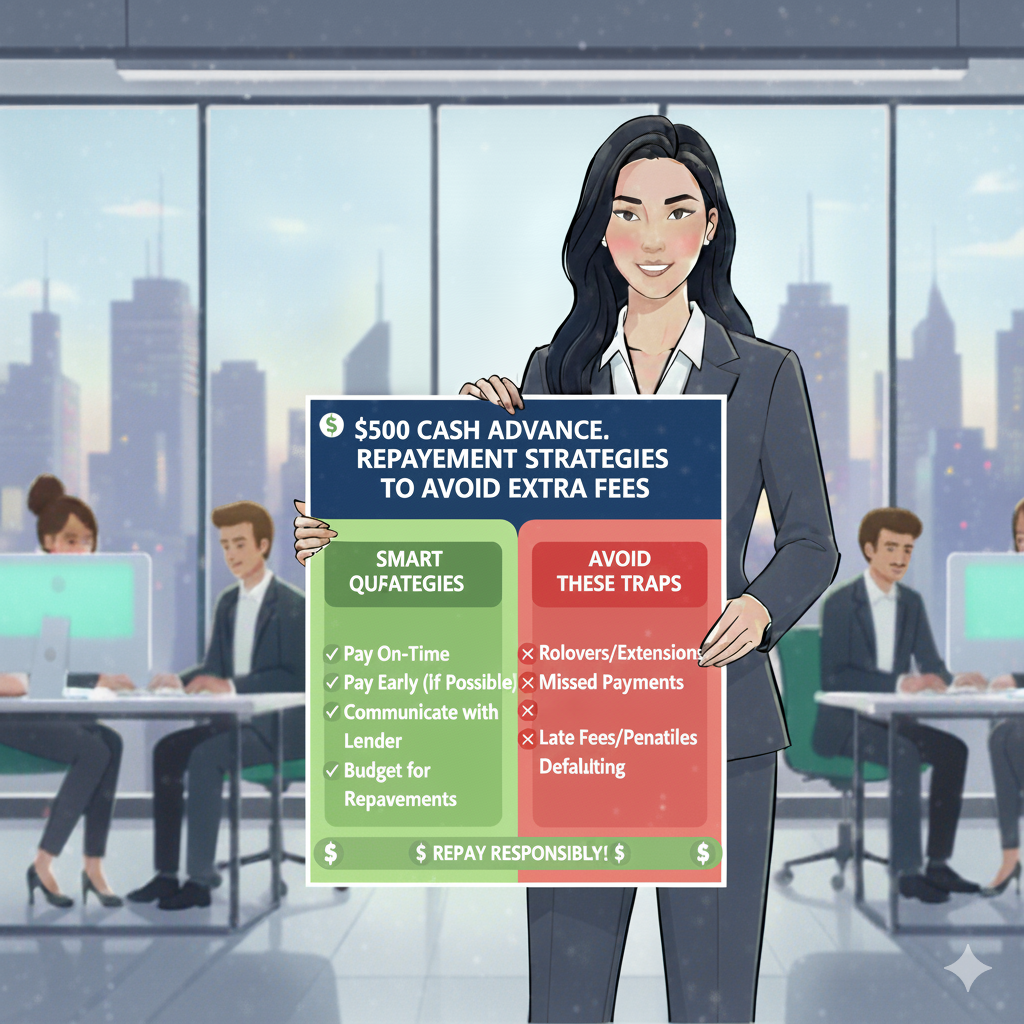
- Plan repayment before accepting the loan. Know the due date, payment amount, payment method, and total repayment.
- Check whether repayment is automatic. Many lenders use ACH withdrawals, which can create overdraft risk if your balance is too low.
- Avoid rollovers when possible. Rollover or renewal fees may extend the loan without reducing the original balance.
- Ask about early payoff. Paying early may reduce cost if the lender allows it.
- Contact the lender early if payment looks difficult. Ask about hardship options, payment plans, or installment options before the due date.
- No-credit-check language does not mean guaranteed approval. Lenders may still verify income, identity, bank-account activity, state availability, and ability to repay.
- The most important number is total repayment. Compare the full amount you will repay, not just the $500 you may receive.
Why Repayment Planning Matters
A $500 cash advance may seem small, but a short repayment window can create pressure if your next paycheck or income deposit is already needed for rent, groceries, utilities, transportation, insurance, or other essential bills.
Extra fees often happen when borrowers do not understand the repayment schedule or cannot make the payment on time. Common costs to watch include:
- late-payment fees;
- returned-payment fees;
- bank overdraft fees;
- rollover or renewal fees;
- extra interest if the loan term is extended;
- collection costs if the loan remains unpaid.
Before accepting any offer, ask yourself: Can I make this payment on the due date without creating another emergency?
Understand Your Loan Terms Before Accepting
Every cash advance has specific repayment rules. Some lenders may require one lump-sum repayment. Others may offer multiple scheduled payments. The final agreement controls what you owe.
Before signing, review:
- Repayment date: the exact day payment is due.
- Payment amount: how much will be withdrawn or paid.
- Payment method: ACH withdrawal, debit card, check, or another method.
- Total repayment: the full amount you will repay from start to finish.
- APR and finance charge: the annualized cost and dollar cost of borrowing.
- Late-payment rules: what happens if you miss the due date.
- Returned-payment rules: what happens if an automatic debit fails.
- Early payoff terms: whether paying early may reduce cost.
- Extension or rollover terms: whether extensions are allowed and what they cost.
When you are searching for a lender and thinking, “i need $500 dollars now no credit check,” slow down long enough to review repayment terms, not just approval speed.
Create a Simple Repayment Plan
Once you know the payment amount and due date, build the repayment into your next pay cycle or income schedule.
- Write down the due date. Add it to your phone calendar, bank app, or budgeting tool.
- Set aside money as soon as income arrives. Treat repayment like rent, utilities, or insurance.
- Check your account balance before the due date. Make sure an automatic withdrawal will not overdraw your account.
- Cut non-essential spending temporarily. Reducing optional spending for one or two weeks may help avoid late fees.
- Keep a small buffer. Leave enough in your account to cover the payment and avoid overdraft risk.
- Save confirmation records. Keep payment receipts, emails, and lender messages.
A simple repayment plan can reduce the chance of extra charges and help you avoid borrowing again immediately after repayment.
Use Reminders to Avoid Late Fees
A missed due date can make a short-term loan more expensive. Set at least two reminders:
- one reminder several days before payment is due;
- one reminder the day before the payment is due.
If the lender uses automatic withdrawals, reminders still matter. They give you time to confirm your account balance, transfer money if needed, and avoid overdraft or returned-payment problems.
Borrowers comparing no credit check loans should look for clear payment-date disclosures and repayment reminders, but they should not rely only on lender notifications.
Consider Installment Options Instead of Rollovers
If you realize the payment may be difficult, contact the lender before the due date. Ask whether an installment plan, extended payment plan, hardship option, or other repayment arrangement is available.
A rollover may sound easier because it can move the due date forward, but it may add a new fee without reducing the original balance. If the loan is rolled over multiple times, the total cost can grow quickly.
Before rolling over, ask:
- What does the rollover cost?
- Does the rollover fee reduce the principal balance?
- How many times can the loan be extended?
- Is an installment plan available instead?
- Can I pay part of the balance now?
- Will an extension affect my total repayment?
If you are comparing a $500 loan no credit check direct lender, review whether the lender explains rollover, renewal, and installment options clearly before you accept.
Know the Real Cost of a Rollover
A rollover can become expensive because it may extend the loan without reducing the balance. For example, if a borrower pays a new fee to delay repayment but still owes the original $500, the borrower has paid more while making little or no progress on the loan.
| Repayment Situation | What It May Mean | What to Ask |
|---|---|---|
| Pay on time | You close the loan according to the original agreement. | Is the total repayment amount clear? |
| Pay late | You may owe late fees, returned-payment fees, or added interest. | What happens if payment is missed? |
| Rollover or renewal | You may pay another fee to extend the due date. | Does this reduce principal or only extend the loan? |
| Installment arrangement | You may repay over multiple payments if available. | What is the total repayment under the new schedule? |
Use Early Repayment If It Reduces Cost
Some lenders allow early payoff. Paying early may reduce interest or total cost, depending on the lender’s terms. However, not every loan calculates interest the same way, and some fees may still apply.
Before paying early, ask:
- Is there a prepayment penalty?
- Will early payoff reduce interest or fees?
- What is the exact payoff amount today?
- How will the lender confirm the loan is closed?
- Will automatic withdrawals stop after payoff?
If early repayment does not reduce cost, it may still help you avoid missed-payment risk, but you should understand the exact payoff terms first.
Use Bank Data Carefully
Some lenders use bank-account verification to review income deposits, account activity, and repayment ability. This can help lenders evaluate borrowers who do not have traditional pay stubs or strong credit histories.
Bank verification may support review, but it does not guarantee approval, lower fees, or better repayment terms. Before connecting a bank account, review:
- who receives access to your data;
- what information may be reviewed;
- how long access may last;
- how to revoke access where available;
- whether bank verification is separate from ACH repayment authorization;
- the privacy and data-sharing terms.
State Rules Can Affect Repayment Options
Loan repayment rules vary by state. Some states limit fees, restrict rollovers, regulate payday-style loans, require specific disclosures, or affect whether installment options are available.
- Texas: Borrowers searching for loans for bad credit Texas should compare lender identity, fees, repayment terms, state availability, and rollover rules carefully.
- Florida: Borrowers looking for Florida bad credit loans should review whether the product is a payday loan, installment loan, or another type of credit, and whether specific repayment rules apply.
- Alabama: Borrowers comparing bad credit personal loans Alabama should check licensing, APR, fees, payment dates, state availability, and renewal terms before accepting.
No matter where you live, avoid any offer that does not clearly explain lender identity, APR, fees, payment dates, total repayment, credit-check terms, renewal rules, and repayment method.
Choose Clear Repayment Terms Over Speed
A fast loan is not helpful if the repayment terms are unclear or unaffordable. Borrowers searching for $500 payday loans online same day should compare more than funding speed.
Before accepting, confirm:
- the lender’s legal name;
- the exact amount you are borrowing;
- the exact amount you will repay;
- the due date or payment schedule;
- whether payment is automatic;
- what happens if payment fails;
- whether early payoff is available;
- whether rollovers or renewals are allowed;
- whether a soft or hard credit inquiry may occur.
How EasyFinance.com Helps Borrowers Compare Repayment Terms
EasyFinance.com helps borrowers compare online emergency loan options from participating lenders. This may help borrowers review possible offers and compare repayment details before accepting a loan.
- Submit an online request. Provide basic personal, income, contact, and banking information.
- Participating lenders review your information. Each lender uses its own approval and credit-review criteria.
- Review possible offers. Compare loan amount, APR, fees, payment schedule, credit-check terms, funding conditions, and total repayment.
- Read the lender agreement. Check all disclosures before signing.
- Receive funds if approved and accepted. Timing depends on the lender, verification, signed documents, funding method, weekends, holidays, and bank processing.
EasyFinance.com is not the final lender and does not guarantee approval, same-day funding, lower fees, lender licensing, early payoff options, or a specific loan amount. The final lender decides whether to approve your request, how much to offer, what the loan costs, whether any credit review is used, when payments are due, and when funds may be sent.
Alternatives If Repayment Looks Difficult
If you are not sure you can repay a $500 cash advance on time, compare alternatives before accepting the loan or rolling it over.
- Payment plan with the biller: Utility companies, medical offices, landlords, repair shops, or insurers may allow direct arrangements.
- Credit-union small-dollar loan: Some credit unions offer lower-cost emergency loans, though review may take longer.
- Payday Alternative Loan: Some federal credit unions offer PALs to eligible members.
- Employer paycheck advance: Some employers or payroll providers offer early wage access.
- Side income or selling unused items: This may reduce how much you need to borrow.
- Borrowing from family or friends: This may reduce cost if repayment expectations are clear.
- Smaller loan request: Borrowing less may make repayment easier and reduce total cost.
How to Borrow More Safely
- Plan repayment before borrowing. Do not accept the loan unless the due date fits your income cycle.
- Compare total repayment, not just payment size. A smaller payment can cost more if the term is long.
- Borrow only what solves the emergency. Do not accept a larger amount just because it is offered.
- Check the legal lender name. Know who funds, services, and collects the loan.
- Review credit-check disclosures. Know whether a soft or hard inquiry may happen.
- Review ACH authorization. Automatic withdrawals can create overdraft risk if your balance is low.
- Avoid upfront fees. Be cautious if anyone asks you to pay money before funding.
- Ask about early payoff. Paying early may reduce cost if the lender allows it.
- Save the agreement. Keep loan terms, payment schedule, credit-check disclosures, lender contact details, ACH authorization, and payment confirmations.
Warning Signs to Avoid
| Warning Sign | Why It Matters |
|---|---|
| Guaranteed approval | Real lenders generally review identity, income, bank activity, state availability, and repayment ability. |
| Guaranteed same-day funding | Funding depends on approval, verification, cutoff times, weekends, holidays, funding method, and bank processing. |
| No clear lender name | You should know who funds, services, and collects the loan. |
| No clear repayment schedule | You need exact payment dates and amounts to avoid late fees. |
| Missing APR or total repayment | You cannot judge affordability without the full cost. |
| Upfront fee before funding | Advance-fee scams may ask for money before sending approved funds. |
| Unclear ACH terms | Automatic withdrawals can cause overdraft problems if your account balance is low. |
| Pressure to roll over or refinance | This can turn a short-term emergency into a longer debt cycle. |
Key Insights
- Repayment planning is one of the best ways to avoid extra fees on a $500 cash advance.
- Borrowers should review due dates, ACH authorization, total repayment, late fees, returned-payment fees, early payoff terms, and rollover rules before signing.
- Rollovers may add fees without reducing the original balance, which can make a small loan more expensive.
- Early payoff may reduce cost if the lender’s terms allow it.
- EasyFinance.com is a BBB-accredited marketplace, not a direct lender.
- No-credit-check language does not mean no verification or guaranteed approval.
- The most important number is total repayment, not approval speed, funding speed, or the $500 loan amount.
FAQ: $500 Cash Advance Repayment Strategies
Can I repay a $500 cash advance early?
Some lenders allow early repayment, but terms vary. Ask whether early payoff reduces interest or fees, whether any prepayment penalty applies, and what the exact payoff amount is.
What if I cannot pay on the due date?
Contact the lender before the due date. Ask about hardship options, installment arrangements, payment plans, or other repayment options. Avoid repeated rollovers if possible because extra fees can increase the total cost.
Will paying late hurt my credit?
It depends on the lender and whether payment activity is reported to credit bureaus. Late payments may also lead to fees, returned-payment charges, overdrafts, collection activity, or account problems.
How can I avoid hidden fees?
Review APR, finance charges, total repayment, payment dates, late fees, returned-payment fees, renewal terms, ACH authorization, and early payoff rules before signing. Avoid lenders that do not clearly disclose costs.
Do no-credit-check loans have repayment options?
Some lenders may offer installment payments, early payoff, or hardship options, but terms vary. Review the final lender agreement before accepting any online loan no credit check.
Does EasyFinance.com decide my repayment terms?
No. EasyFinance.com is a marketplace, not the final lender. The final lender decides approval, APR, fees, repayment schedule, early payoff terms, extension rules, and funding timing.
Is a rollover better than paying late?
Not always. A rollover may add new fees and may not reduce your original balance. Ask whether an installment arrangement, hardship option, or payment plan is available before rolling over a loan.
Why use EasyFinance.com?
EasyFinance.com is a BBB-accredited loan marketplace that helps borrowers compare online emergency loan options from participating lenders in one place. Borrowers should still review the final lender agreement and repayment terms carefully before accepting any loan.
Related Resources
- How Direct Lender $500 Cash Advances Work vs. Loan Marketplaces
- Best States for $500 Cash Advance No Credit Check Loans in 2025
- $500 Cash Advance Approval Odds with Bad or Fair Credit
- Using Bank Account Data to Qualify for a $500 Cash Advance Fast
- Online $500 Cash Advance vs. Payday Loans — Which Costs Less?
- How to Avoid Predatory $500 Cash Advance Lenders Online
- Same-Day $500 Cash Advance Options When Banks Are Closed
- $500 Cash Advance With No Credit Check — Safe Borrowing Tips
- Alternatives to a $500 Cash Advance if You’re Short on Cash
- How to Spot Legitimate Direct Lenders for $500 Cash Advances
- $500 Cash Advance No Credit Check — Pros and Cons Explained
- The Real Cost of Rolling Over a $500 Cash Advance Loan
- How to Boost Approval for $500 Cash Advances Without Hard Pull
- Why Direct Lender $500 Cash Advances Are Faster Than Brokers
- Emergency $500 Cash Advance for Medical or Car Repairs
- $500 Cash Advance vs. Installment Loans — What to Choose?
- No Credit Check $500 Cash Advance for Gig and Freelance Workers
- $500 Cash Advance Repayment Strategies to Avoid Extra Fees
- How to Rebuild Credit After Using a $500 Cash Advance
- Comparing $255 Payday Loans vs. $500 Cash Advances — Key Differences


 EasyFinance Blog
 Twitter
 Facebook
 Google+
 LinkedIn
 Email Subscriptions